
Jefferson County Parole or Probation
Parole and probation both allow a person to live outside a jail or prison, but they arise in different ways. Parole is conditional release from an Oklahoma prison term for the balance of confinement. Probation is community supervision imposed by a court, often through a suspended sentence. A deferred sentence postpones sentencing and may end in dismissal and expungement after successful completion. These distinctions matter because a Jefferson County Jail release record may show that physical custody ended without stating the person's current state-supervision terms.
The Oklahoma Department of Corrections, or ODOC, supervises eligible people on both probation and parole. The Oklahoma Pardon and Parole Board handles parole consideration and publishes public proceeding records. It does not supervise daily conduct. A Jefferson County judge controls probation orders in the county case, while ODOC carries out assigned supervision. A Board recommendation, court order, and actual release are separate events.
A county release disposition may use a broad term such as probation, transfer, or court order. That label should be reconciled with the judgment. A suspended sentence is a conviction for which incarceration is suspended in whole or in part. A deferred sentence postpones sentencing and may lead to dismissal if all conditions are completed. Neither should be casually rewritten as parole. Using the right term points the inquiry to the correct agency and record.
| Feature | Parole | Probation |
|---|---|---|
| How it begins | Conditional release after prison custody | Court-ordered community sentence or suspended term |
| Key public trail | PPB docket or result, ODOC status, then release implementation | Court judgment, ODOC supervision record, later completion order |
| What it does not prove | A docket listing alone does not prove release | Probation alone does not prove prior prison custody |
| How it ends | Discharge after the governing term and conditions | Completion, discharge, or a court action |
Verify Jefferson County Post-Release Supervision
Begin with identity and case facts. An exact name is not enough when Oklahoma records contain similar names. Use a date of birth or age, ODOC number, Jefferson County case number, offense, and sentencing county. Then follow the record from the court or Board to ODOC. The state record may show a facility, community placement, inactive status, or supervision entry. Read those labels together instead of treating one word as a complete answer.
- Search the ODOC Offender Lookup by full name and, if known, ODOC number. Compare the photo, aliases, county, case, and sentence details.
- Review the Jefferson County case through OSCN. Look for a judgment, suspended or deferred sentence, revocation, warrant, or order ending supervision.
- For parole, search the PPB Dockets and Results archive. Treat the hearing stage and outcome as procedural records, not as a release timestamp.
- Call the assigned ODOC office with the matched identifiers. Ask for public routing or status information, while recognizing that detailed conditions can be confidential.
- If the public record is closed or unclear, request discharge confirmation from ODOC Offender Records rather than assuming that a vanished profile means discharge.
Jefferson County Supervision Routes Through Duncan
Current ODOC routing assigns both Jefferson and Stephens Counties to the Duncan Probation and Parole Office. It is a community-supervision office, not a jail and not a place to request the original county release timestamp. That neighboring-county assignment is important. Looking only for a parole storefront in Waurika can lead to a false dead end. The Jefferson County Jail keeps the local booking and release entry; Duncan handles the current ODOC supervision route.
118 South 11th Street
Duncan, OK 73533
Phone: 580-255-1010
Fax: 580-248-7617
Call for current office and records instructions.
The official ODOC office directory is the source to check before a visit or call because assignments may change. Its Duncan listing shows the two-county service area.
The directory view demonstrates where Jefferson County supervision is routed.
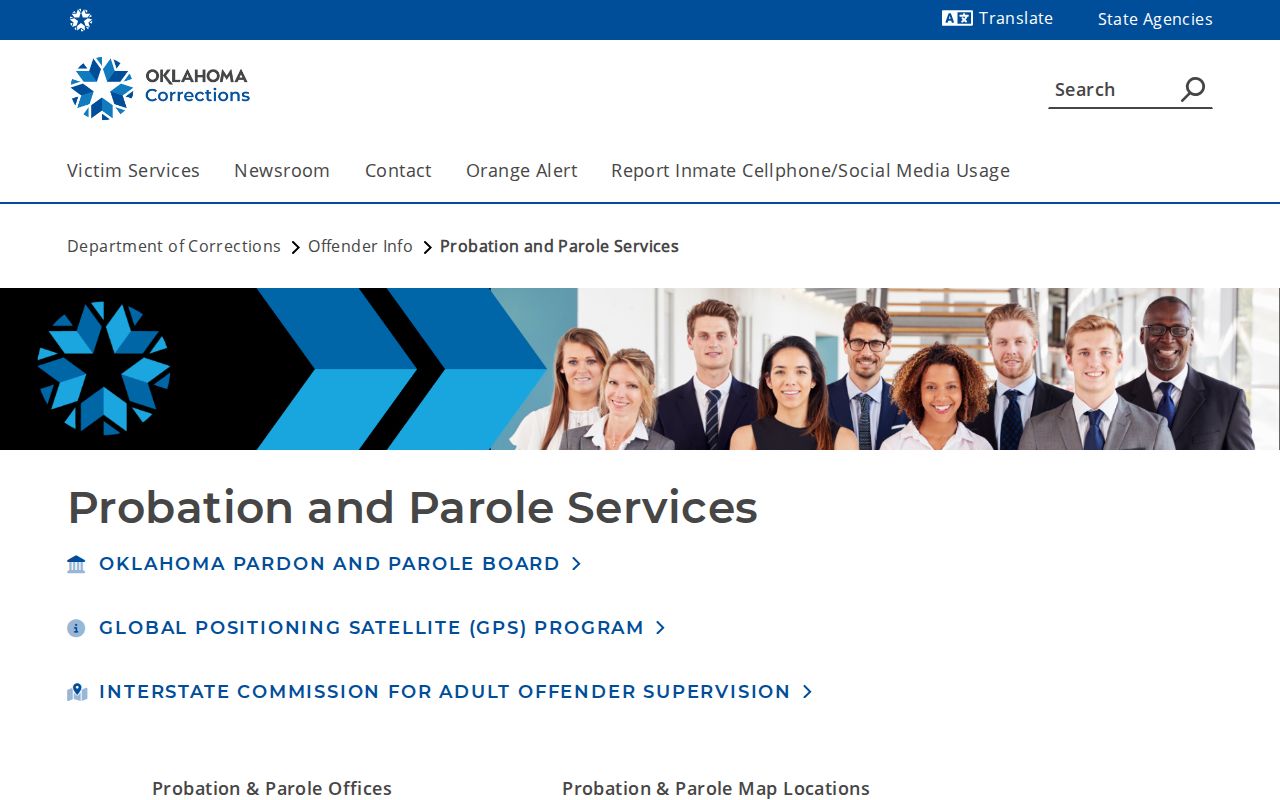
This official screen helps distinguish the supervising office from the Waurika jail and court record custodians.
Jefferson County Supervision and Warrants
Supervision may require reporting, lawful conduct, approved residence or travel, treatment, testing, or other terms stated in the order. The exact rules belong to the person's documents and supervising officer. A violation allegation does not by itself establish guilt, a new sentence, or a new release date. It can lead to an ODOC response, a court revocation case, a warrant, or renewed custody, depending on the legal authority involved.
An absconder is a person alleged to have stopped reporting or left supervision without authorization. ODOC's Fugitive Warrants Division lists 405-425-2570 and 405-425-2571, toll-free 866-363-1119, and warrants@doc.ok.gov for fugitive information. A public listing is a warning and a status lead. Do not approach or try to detain a listed person. Contact law enforcement when there is an immediate safety issue, and use the court docket to understand any filed warrant or revocation action.
- Parole
- Conditional community release for part of a prison term.
- Probation
- Court-ordered community supervision, often tied to a suspended or deferred sentence.
- Absconder
- A person alleged to have left or stopped reporting to supervision without permission.
- Revocation
- A court or agency process that may withdraw community status after a proven violation.
- Discharge
- The formal end of a sentence or supervision obligation.
Jefferson County Parole Hearing Records
Parole records have several milestones. The Board posts annual meeting dates, agendas, and minutes through its meeting calendar. A separate search accepts a month, year, optional ODOC number, last name, and county. Jefferson can be chosen as the county filter. The result may reveal whether the matter was set for parole, administrative parole, commutation, or another Board stage.
A favorable action is not the same as walking out of prison. Depending on the offense and governing law, the Board may recommend action to the Governor or grant parole where authorized. A pass means later consideration, and a denial is not release. Actual community release occurs only after all required action and ODOC implementation. Eligibility under 57 O.S. § 332.7 is sensitive to the offense and its date, and offenses listed in 21 O.S. § 13.1 face an 85 percent minimum before parole eligibility.
The PPB victim-notification page documents a parole-specific notice path.
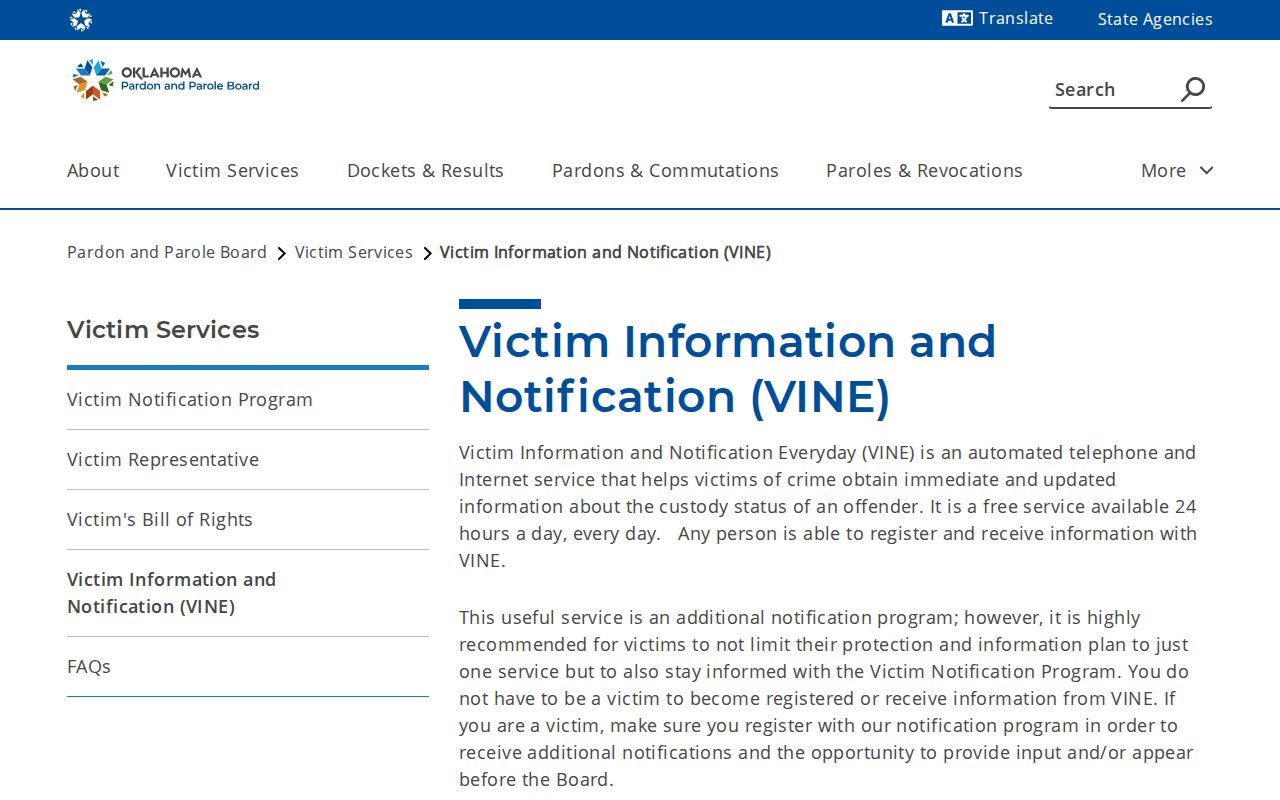
Board notice and OK VINE custody alerts are separate systems, so one registration should not be assumed to cover both.
Confirm Jefferson County Discharge Records
A public ODOC profile may become hard to find after a case closes. Jefferson County has a stronger fallback than guessing from a blank search: ODOC publishes the discharge-only address osordischarges@doc.ok.gov and lists Closed Records at 405-425-2691. The ODOC Legal Services page also provides an authorization process for incarceration and supervision records. This is useful when a person wants their own complete history or has authorized access to restricted material.
Ask for the specific item needed, such as discharge date, supervision end status, confinement history, or correction of an erroneous entry. Include the person's full name, ODOC number, and Jefferson County case details. Do not ask the Duncan office to reconstruct a jail release. For local custody, the Jefferson County released inmate search and records path begins with the jail's booking and release entry.
Note: A closed public profile and a formal ODOC discharge record are different forms of evidence and should not be treated as interchangeable.
When Jefferson County Supervision Ends
Supervision ends through a formal legal event, not merely because a name disappears from a current list. A parole term can reach discharge after the remaining term and conditions are satisfied. Probation can end by completion, discharge, dismissal after a qualifying deferred sentence, or another court order. Revocation can instead return the case to active court or custody proceedings. Read the court file, ODOC status, and discharge response together.
OSCN may show an order terminating supervision, sentence satisfaction, dismissal, or a sealed result. ODOC may keep a separate incarceration and supervision history. The jail's record shows when local physical custody ended, but it does not establish that every later obligation ended. Give each office the same name, case number, ODOC number, and date range so the replies can be compared without mixing two people.
Oklahoma expungement under 22 O.S. §§ 18 and 19 is a separate process. Eligibility depends on the case, and a petition is filed in the district court where the arrest information is located. A sealed public docket can limit what a search returns without changing the fact that supervision once existed. When public access is restricted, say that confirmation is unavailable through that channel. The records should not be reconstructed from unrelated clues.
Keep the final documents. A discharge letter, court order, or official ODOC response is more reliable than a screenshot taken from a changing public portal. It identifies the event that ended supervision and the agency with authority to confirm it.
Public Record Search
Sponsored Results